
You’ve signed up for the race.
The training plan is on the fridge. The miles are building. You're squeezing runs in before work, after work, between kids’ activities, and wherever else you can find the time.
Yet despite all that effort, something doesn't feel quite right.
Your energy is inconsistent. Recovery seems slower than expected. Long runs leave you wiped out for days.
For many runners, the problem isn't the training.
It’s the fueling.
Running Creates New Nutritional Demands
When you begin training for a 10K, half marathon, marathon, or triathlon, your body suddenly requires more than it did before.
Most people think about nutrition as simply eating enough to get through the day. Runners have to think about two separate needs:
First: Fueling daily life
This is the energy your body needs just to function—working, parenting, sleeping, and handling everyday responsibilities.
Second: Fueling training
Every run, workout, gym session, hike, bike ride, and active weekend adds to the equation.
The result? Many runners underestimate how much energy they’re actually using.
A runner who feels perfectly fine eating 2,000 calories a day may suddenly need significantly more once marathon training begins. Unfortunately, many athletes never make that adjustment.
Common Signs You’re Under-Fueled
If you’re not matching nutrition to training load, your body usually lets you know.
Some common clues include:
- Feeling drained during workouts
- Heavy or sluggish legs
- Struggling to hit paces you’ve run before
- Lingering soreness
- Poor recovery between sessions
- Constant hunger—or sometimes the opposite
Many runners assume they need more motivation, more discipline, or a tougher mindset.
In reality, they often just need more fuel.
Carbohydrates Are Your Training Partner
Carbs have developed an unfair reputation over the years.
For endurance athletes, carbohydrates are one of the most effective performance tools available.
They’re the primary fuel source your body uses during harder efforts and longer runs.
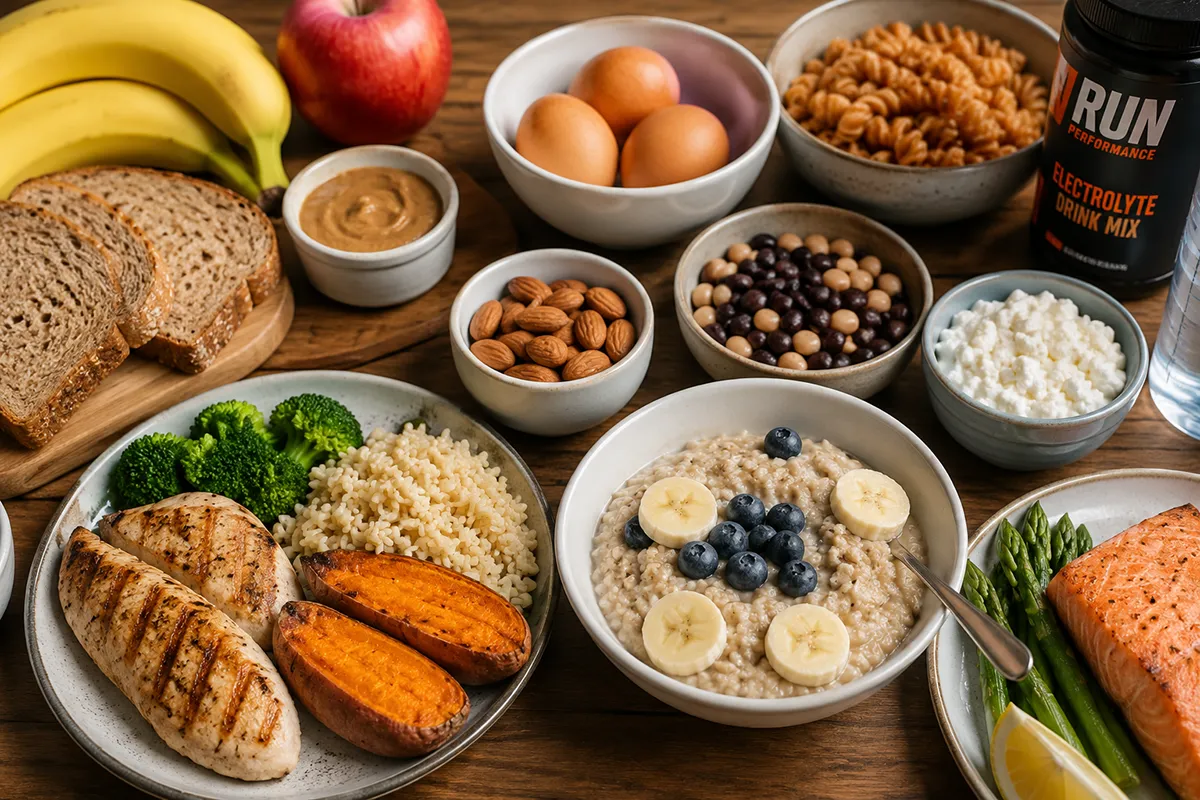
Focus on quality sources such as:
- Oatmeal
- Rice
- Potatoes
- Whole grain breads
- Fruit
- Pasta
The goal isn’t perfection.
The goal is consistently providing your body with the energy it needs to train well.
Don’t Forget About Recovery
Training breaks the body down.
Recovery rebuilds it stronger.
Protein plays a major role in that process.
A practical target for most runners is approximately:
0.8–1.0 grams of protein per pound of body weight each day
Good options include:
- Eggs
- Greek yogurt
- Chicken
- Fish
- Lean beef
- Cottage cheese
- Beans and legumes
Spreading protein throughout the day is often more effective than trying to consume it all at dinner.
Timing Matters More on Big Training Days
You don’t need a detailed nutrition spreadsheet to become a better runner.
But on workout days and long-run days, a little planning goes a long way.
Before Your Run
Aim for foods that digest easily and provide accessible energy.
Examples include:
- Toast with honey and banana
- Oatmeal with fruit
- Bagel with nut butter
- Rice with eggs
The objective is simple: start your run fueled rather than running on empty.
Long Runs Require Fuel Along the Way
One of the biggest mistakes we see is runners treating a two- or three-hour run the same way they’d treat a 30-minute easy jog.
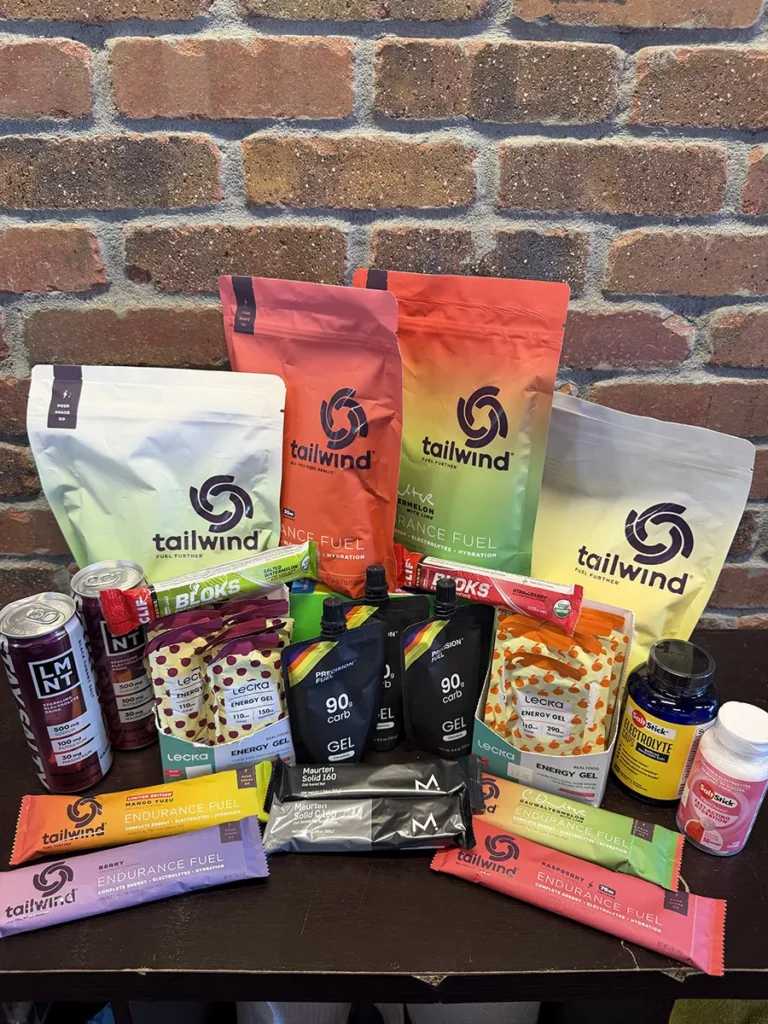
Once your runs stretch beyond about 90 minutes, your body benefits tremendously from additional carbohydrates during the effort.
Many runners perform best when consuming:
- 60–90 grams of carbohydrates per hour
- Fluids consistently throughout the run
- This often comes from:
- Gels
- Chews
- Sports drink mixes
Remember, sports nutrition is performance nutrition. It serves a different purpose than your everyday eating habits.
Focus on Real Food Most of the Time
Nutrition doesn’t have to be complicated.
A simple question can guide many decisions:
“Did this food look like food before it came in a package?”
Most of the time, choosing foods that are closer to their natural form is a great place to start.
Think:
- Potatoes over chips
- Fruit over candy
- Oats over sugary cereals
Small improvements made consistently often produce the biggest results.
The Payoff
When your nutrition finally matches your training load, things start to change.
Runs feel smoother.
Workouts become more productive.
Recovery improves.
Race day feels less like survival and more like the celebration of all the work you’ve put in.
A Final Thought from the Fit Stool
Most runners spend plenty of time thinking about shoes, workouts, and race goals.
Far fewer spend enough time thinking about fueling.
If you’re putting in the work but not seeing the results you’d hoped for, it may be worth looking at what’s on your plate before changing what’s on your training schedule.
Questions about pre-run meals, race-day fueling, hydration, or sports nutrition products?
Pull up a stool next time you’re in the shop. We’d love to help.
0 Comments